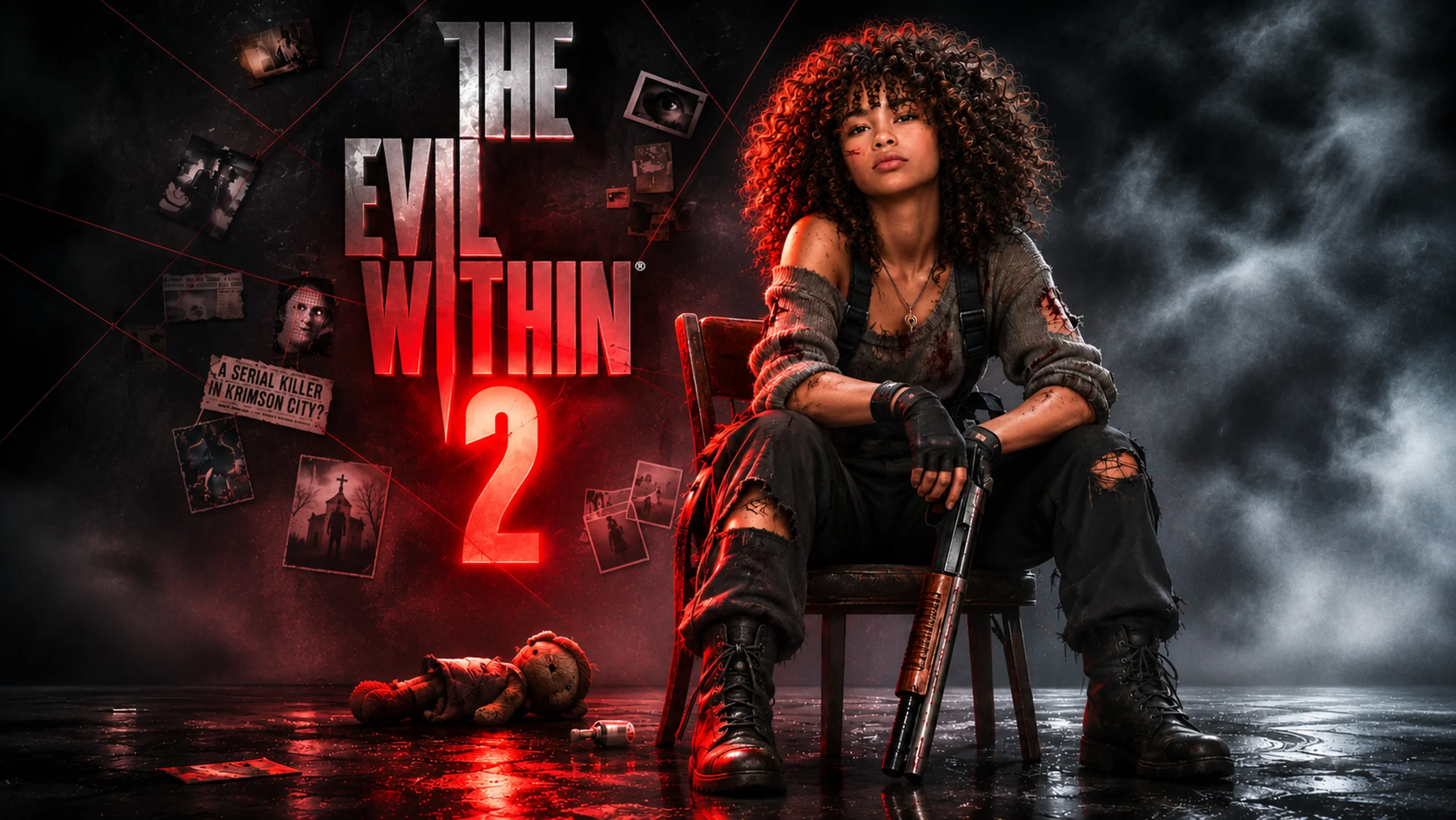
THE EVIL
WITHIN 2
Your Worst Nightmare.
A CITY THAT DOESN’T EXIST
Some cities never sleep. Others never wake up. And then there's Union. At first glance, it looks like the kind of American small town where everybody knows everybody, the coffee is terrible and the most exciting event of the week is somebody stealing the mayor's parking space. Except the streets are deserted, the houses are bleeding and somewhere beyond the next intersection, a woman with a rather unfortunate relationship to a circular saw is waiting to introduce herself. Welcome to Union, a place where reality has resigned, common sense has left the building and the laws of physics are apparently on extended vacation.
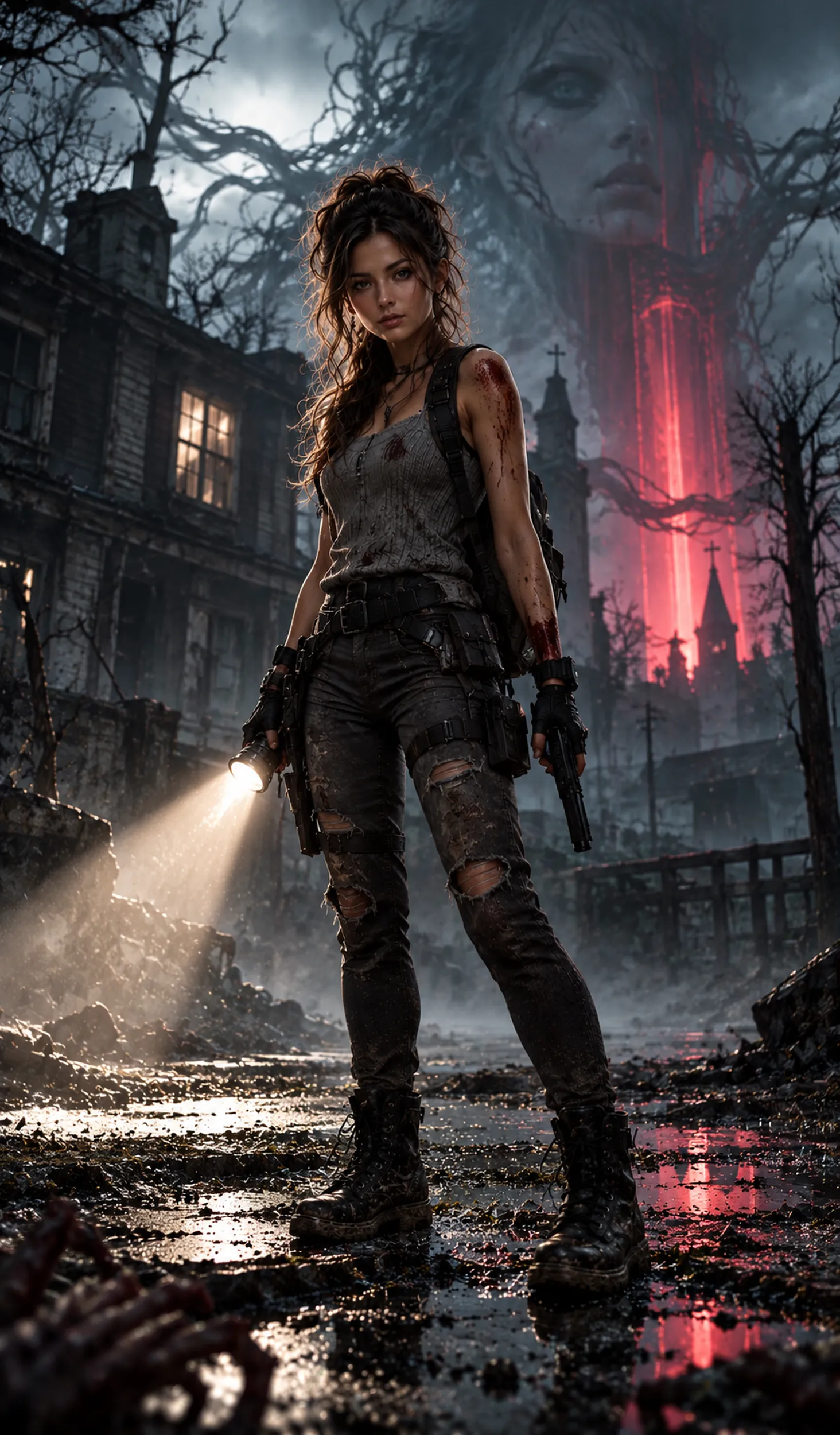
Sarah stands beneath a flickering streetlight, watching an entire apartment building hang impossibly above the road. Somewhere in the distance, a siren screams before falling silent. Her phone vibrates. It's Joelle, who has apparently decided that getting lost inside somebody else's nightmare wasn't quite adventurous enough for one evening.
JOELLE: “Tell me you've found the way out.”
SARAH: “I've found a church, three abandoned cars and something that looks suspiciously like a human centipede.”
JOELLE: “So… no?”
SARAH: “Working on it. 😏”
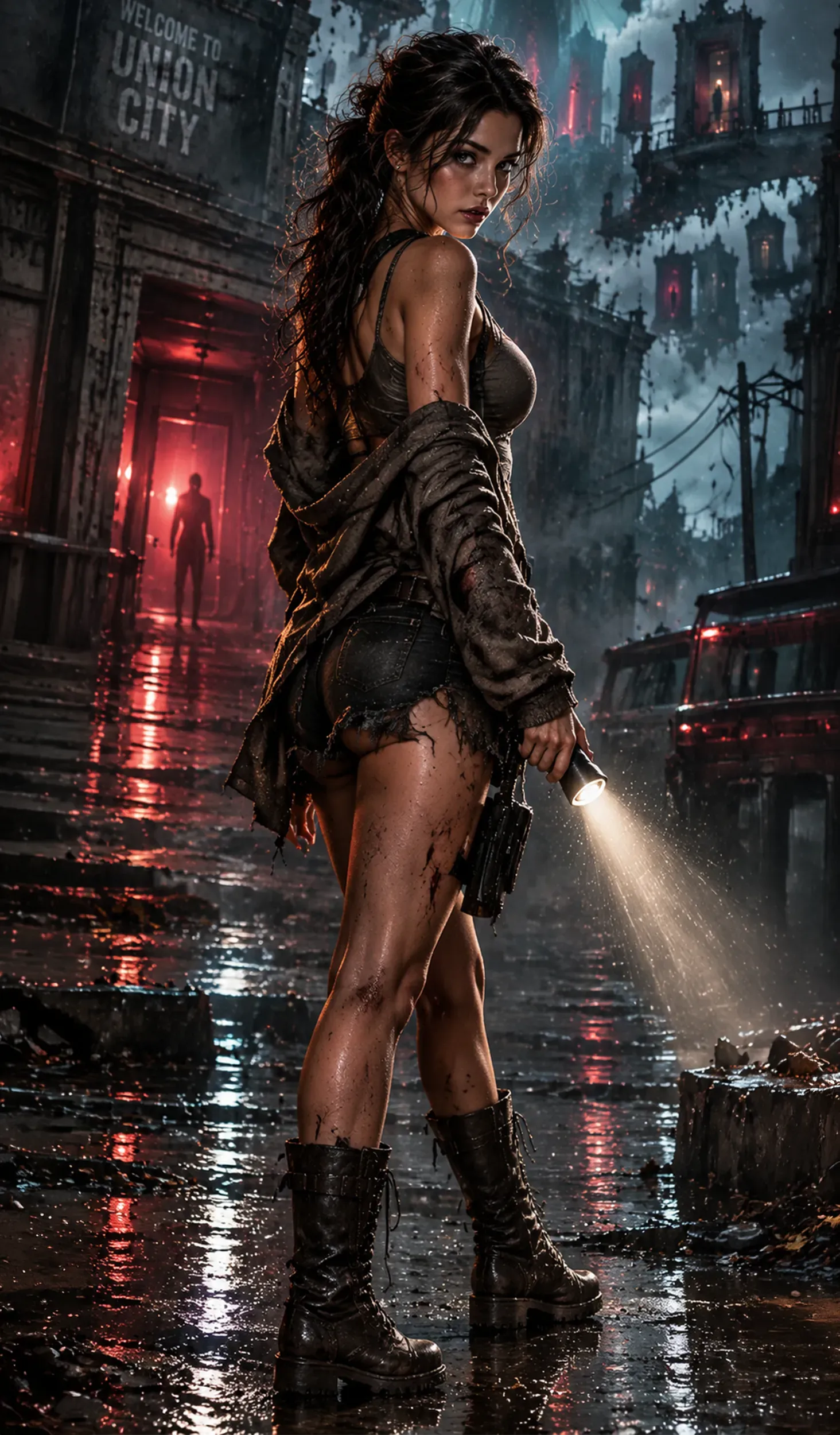
Sarah looks toward the darkness. Somewhere inside this impossible town, a former detective named Sebastian Castellanos is searching for a little girl he believed was dead. A man who has already survived one nightmare and is about to discover that the sequel is considerably less interested in playing fair. Because Union isn't merely a town. It's an artificial world constructed from human consciousness, and the little girl at its centre is Sebastian's daughter, Lily. Finding her means entering a reality built from other people's minds, fears and darkest obsessions. Sarah raises her flashlight, takes one last look at the collapsing skyline and makes a decision. It's time to hand this particular nightmare over to someone with excellent survival instincts, questionable luck and an impressive collection of curls.
SARAH: “Joelle? You're up.”
THE GIRL WHO NEVER CAME HOME
There are some things you never truly recover from, and for Sebastian Castellanos, losing his daughter Lily in a house fire was one of them. Losing his wife Myra to the mystery surrounding that tragedy was another. Three years after the events of the original The Evil Within, Sebastian has become a shadow of the detective he once was, haunted by memories of Beacon Mental Hospital, drowning his grief in alcohol and struggling to distinguish nightmares from the memories he desperately wants to forget. Then Juli Kidman returns. Former colleague, secret operative and apparently the only person in the room who knows how to turn a family tragedy into a classified corporate project. She has news that changes everything: Lily is alive.
The mysterious organisation MOBIUS has been using Lily's mind as the central consciousness of a new STEM system, a technology capable of connecting human minds inside a shared artificial reality. Its creation, Union, was supposed to be a perfectly controlled community. Unfortunately, something has gone catastrophically wrong. The town is disintegrating, its inhabitants are turning into monsters and the MOBIUS personnel sent to investigate have largely stopped responding. Sebastian has one choice: enter STEM again and rescue his daughter. Joelle, meanwhile, listens to the briefing while checking the ammunition in her pistol, trying to decide which part of this assignment sounds least reassuring.
JOELLE: “So we're entering a collapsing simulation built inside a child's mind, operated by a corporation with a history of human experimentation?”
Kidman doesn't answer.
JOELLE: “Fantastic. I was worried this assignment might be boring. 🙄”
BEAUTIFUL PEOPLE, TERRIBLE INTENTIONS
Developed by Tango Gameworks and released by Bethesda Softworks in 2017, The Evil Within 2 takes the psychological terror of its predecessor and expands it into a considerably more adventurous survival-horror experience. Where the first game frequently pushed players through tightly controlled corridors of suffering, its sequel introduces larger, interconnected environments that reward curiosity, exploration and the occasional spectacularly bad decision. Union becomes a playground of nightmares, with abandoned houses, hidden supplies, disturbing side stories and enough ammunition shortages to make even the most enthusiastic action hero reconsider their career choices.
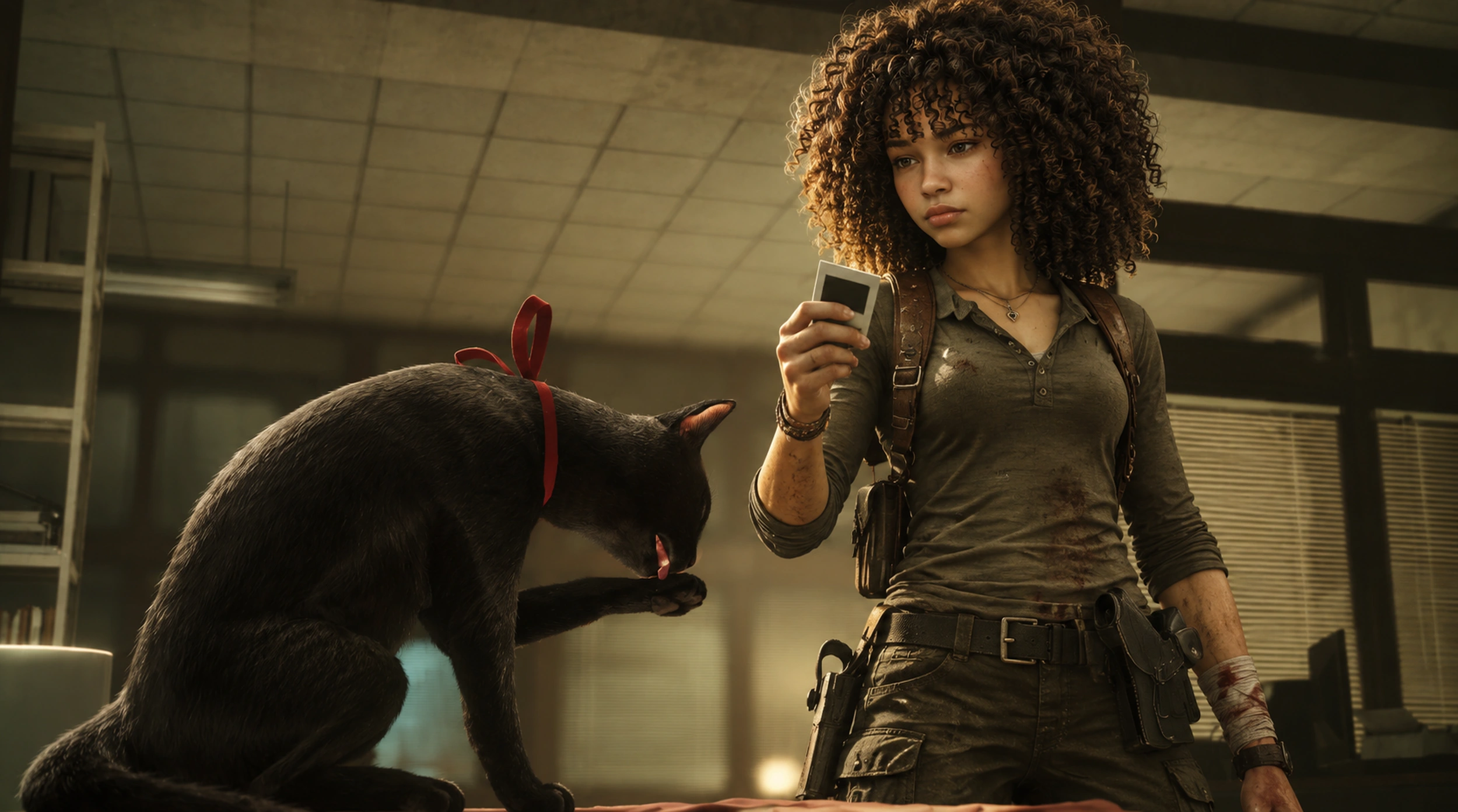
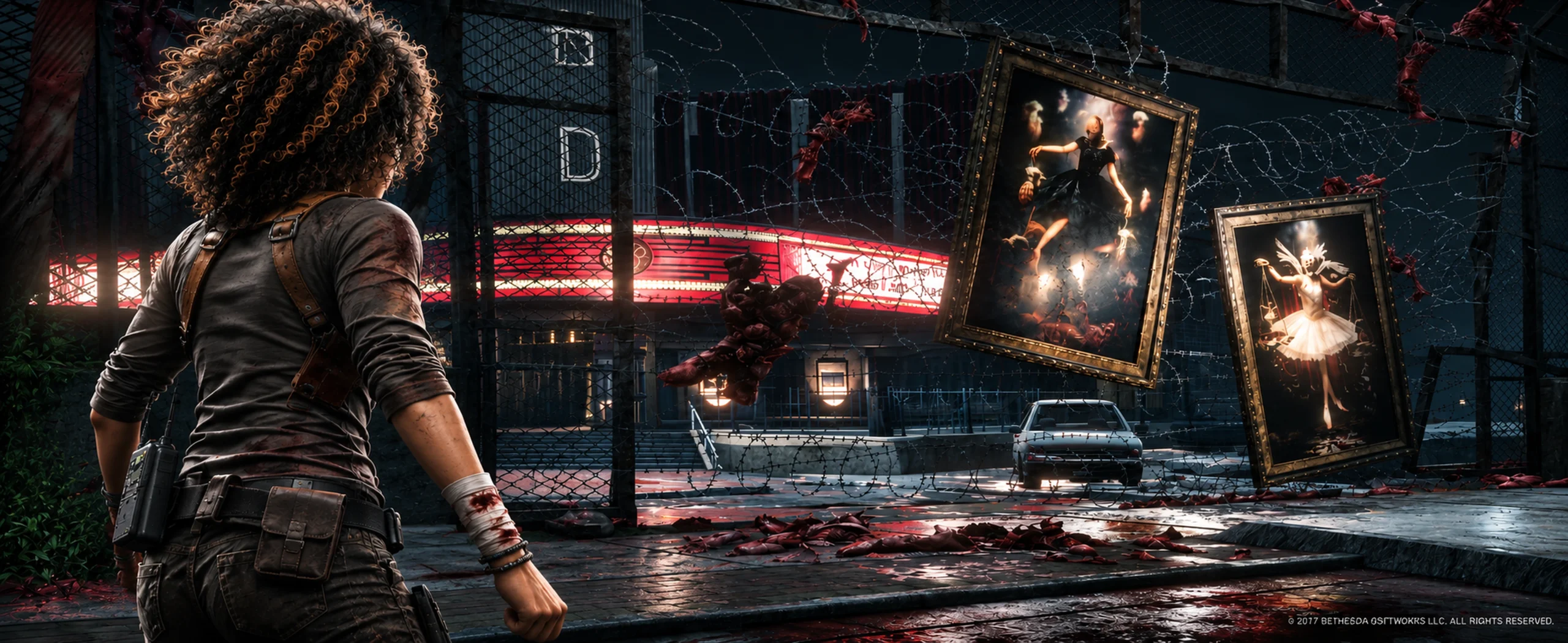
For Joelle, the first lesson arrives almost immediately: the monsters are terrifying, but running out of bullets is worse. Every cartridge matters, every bottle can become a distraction and every dark corner might conceal valuable supplies or something with considerably too many teeth. The Lost, once ordinary inhabitants of the STEM world, now roam the streets as violent, grotesquely transformed creatures. Their movements are unpredictable, their attacks vicious and their personal hygiene beyond redemption. Joelle crouches behind an overturned police car as one of them shuffles past, waiting for the perfect moment to slip into a nearby building.
JOELLE: “See? Stealth. Patience. Professionalism. 😎”
A floorboard creaks beneath her boot. The creature turns, its distorted face twisting toward the sound.
JOELLE: “Oh, for heaven’s sake. 😩”
A gunshot tears through the silence, and professionalism takes a short, unscheduled holiday. Fortunately, The Evil Within 2 gives players plenty of ways to survive these encounters. Stealth kills, environmental traps, crafted ammunition, weapon upgrades and Sebastian's evolving abilities all contribute to a surprisingly flexible combat system. The semi-open streets of Union encourage experimentation, while the game's carefully designed interiors remind us that sometimes the most frightening place imaginable is a perfectly ordinary house with a door that really should have stayed closed.
DEATH BECOMES HER
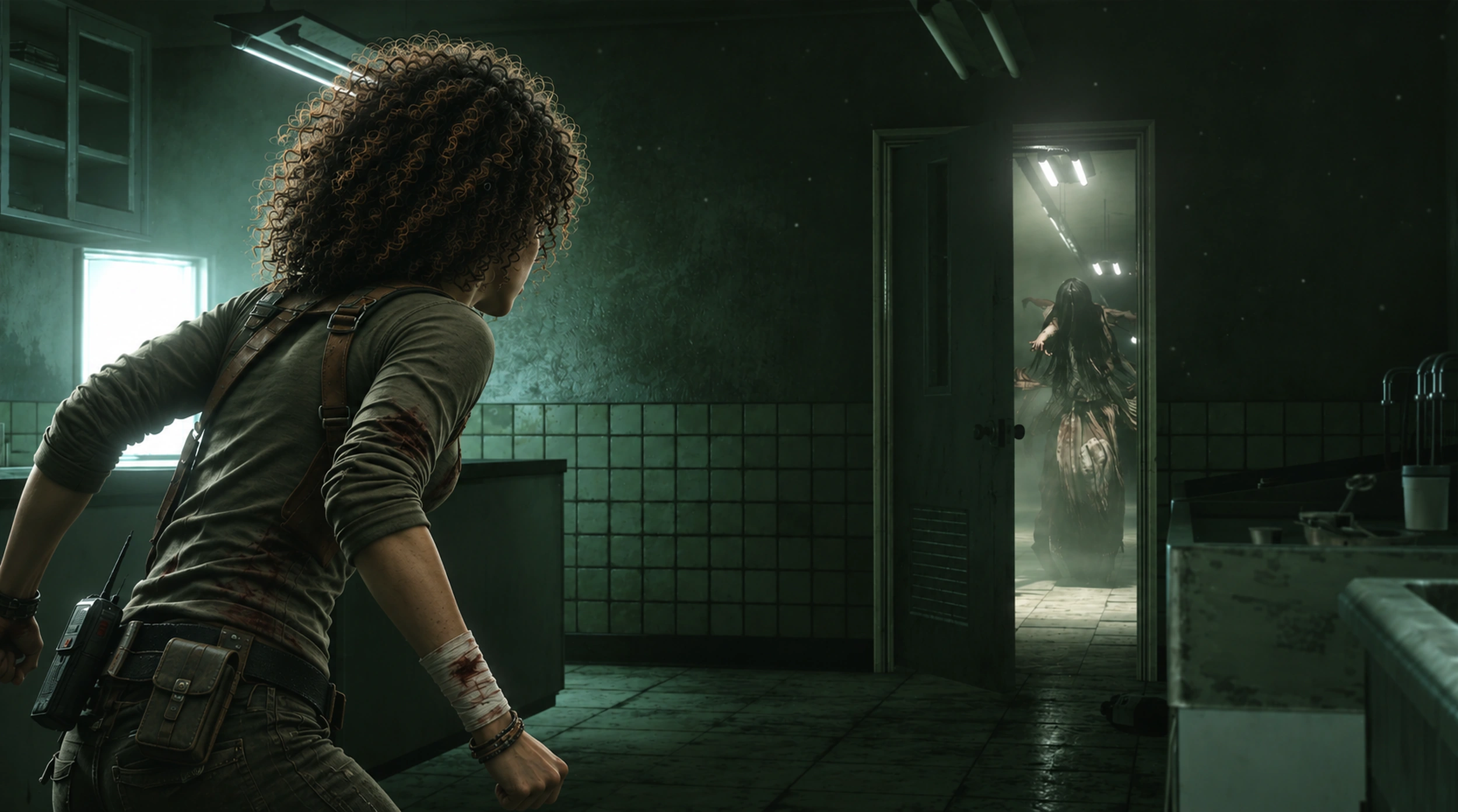
And then there's Stefano Valentini. A photographer, a murderer and a man whose understanding of artistic expression would probably get him permanently banned from every respectable gallery on Earth. Stefano doesn't merely kill people; he transforms their final moments into grotesque installations, freezing death in elaborate compositions that combine beauty, cruelty and a truly disturbing obsession with perfection. For him, suffering is art, and Union provides an unlimited canvas. Joelle discovers his work inside a dimly lit building where a camera flash illuminates a suspended body, trapped in the endlessly repeating instant of its own death. She studies the scene with the expression of someone who has just paid thirty euros to visit a particularly pretentious exhibition.
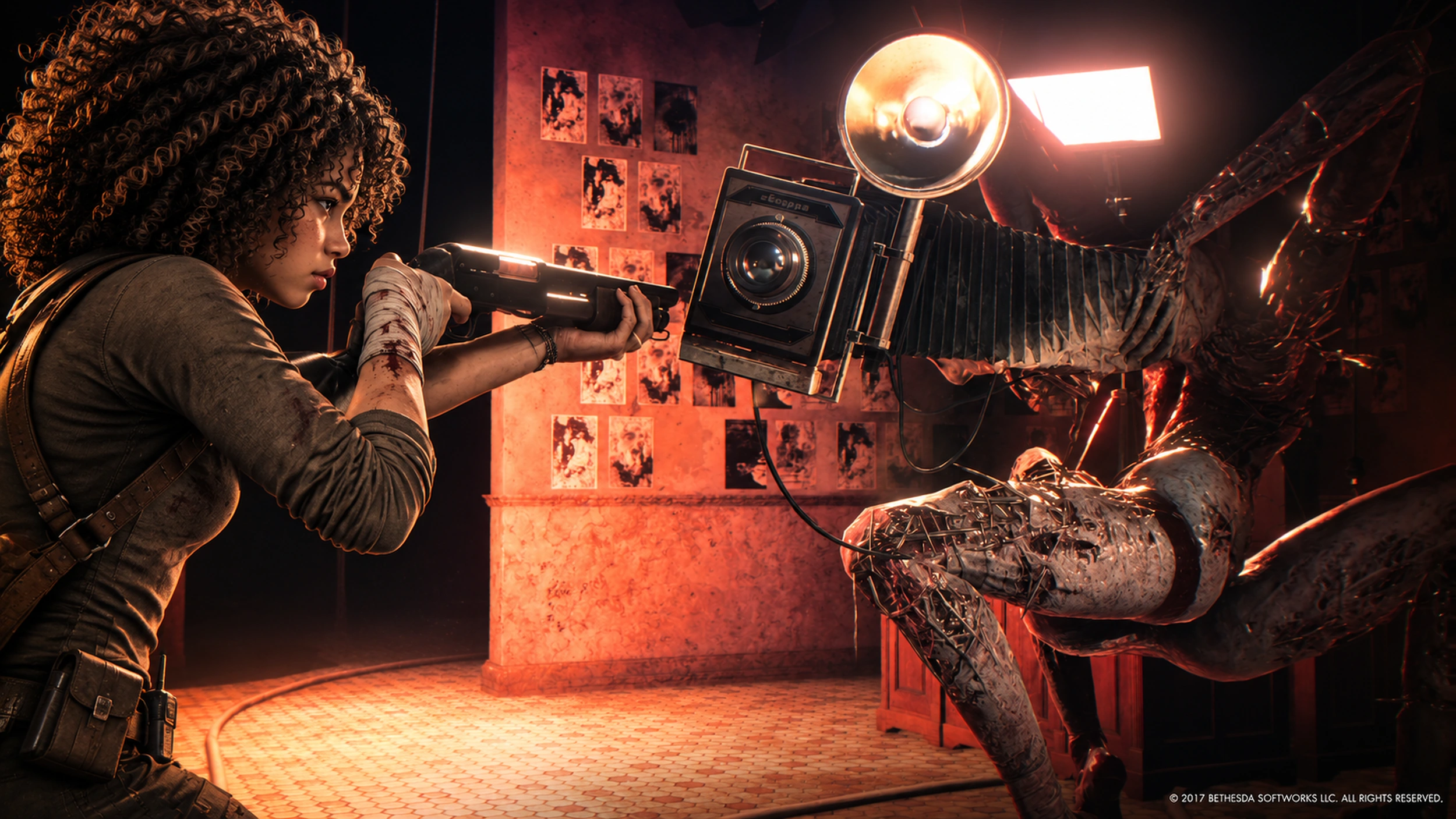
Stefano's voice echoes through the room, and Joelle realises that the artist is considerably more interested in creating his next masterpiece than discussing the merits of his previous work. His monstrous creation Obscura, a grotesque fusion of flesh and photographic machinery, introduces another unpleasant complication: the ability to interfere with time itself. Suddenly, escaping a room becomes less a matter of finding the door than surviving the artist's increasingly elaborate attempts to turn Joelle into a permanent exhibit.
JOELLE: “Let me guess. No photography allowed? 📸”
The lights go out. When they return, the creature is closer. Much closer. Joelle raises her weapon and decides that perhaps this particular exhibition would benefit from a little constructive criticism. Stefano's sequences are among the game's most memorable achievements, transforming familiar environments into surreal galleries where perspective, architecture and time become instruments of terror. Yet beneath the extravagant imagery lies something more unsettling: Union is not simply collapsing because its technology has failed. It is being reshaped by powerful, damaged minds whose obsessions are becoming reality. And Stefano is only one of the forces threatening Lily.
THE THINGS WE CARRY
For all its grotesque creatures and spectacularly disturbing environments, The Evil Within 2 has a surprisingly human heart. Sebastian isn't trying to save the world or defeat some conveniently evil mastermind for the greater good of humanity. He's trying to save his daughter, and every step through Union forces him to confront the guilt, grief and helplessness that have consumed his life. As the story unfolds, the nightmare becomes increasingly personal, revealing the terrible consequences of MOBIUS's experiments and the sacrifices made by those who believed they could control human consciousness.
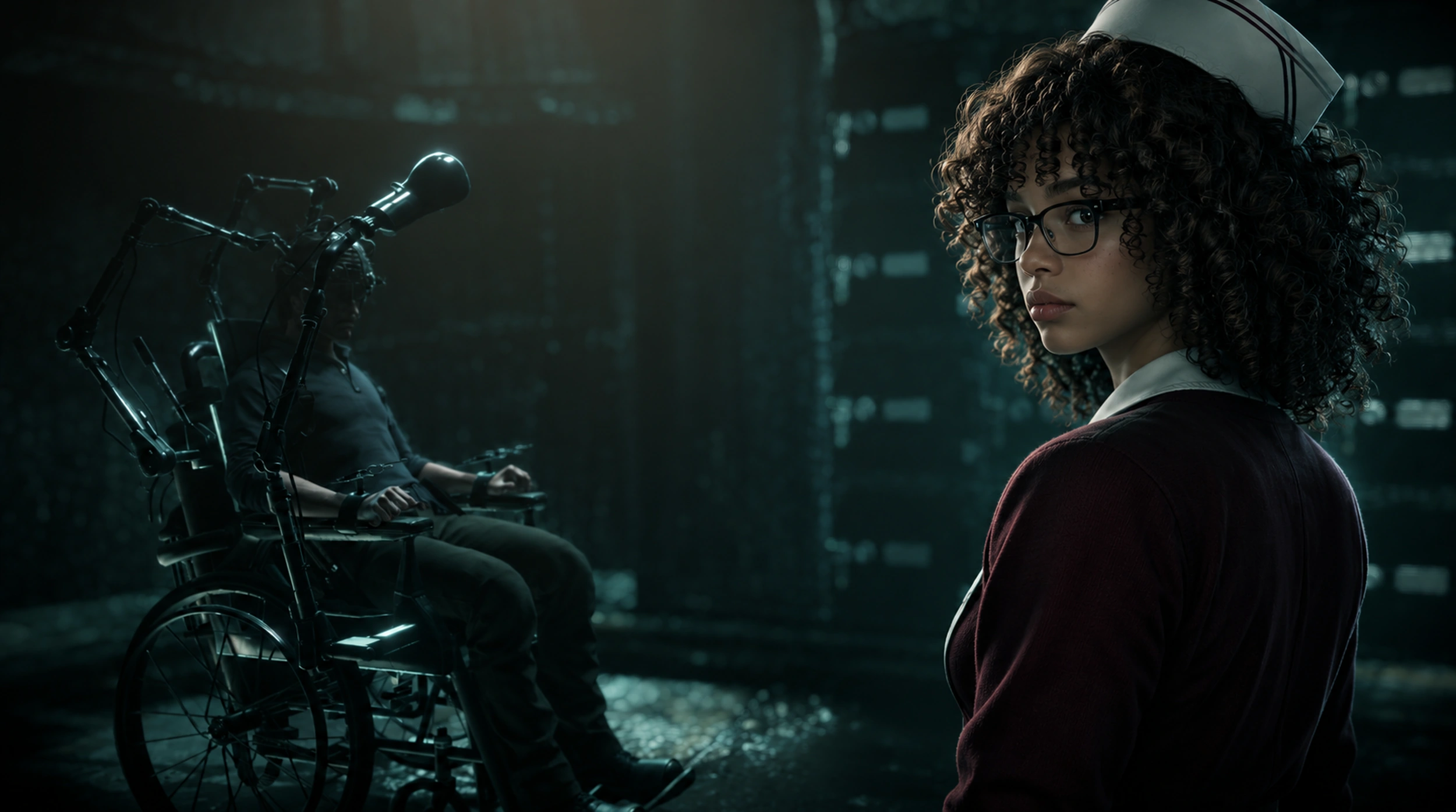
The arrival of Father Theodore, a fanatical figure promising salvation through absolute obedience, introduces another form of horror. Where Stefano sought beauty in death, Theodore seeks power through fear, exploiting the weaknesses and memories of those trapped inside STEM. Sebastian must confront manifestations of his own past, including the horrors of Beacon Mental Hospital, while struggling to protect the one person who still gives his life meaning. Joelle finds herself moving through corridors that feel less like a computer-generated environment than somebody's wounded memory, surrounded by family photographs, children's drawings and fragments of a life that should never have been stolen.
Somewhere beyond a half-open door, she hears a child's voice. For a moment, the creatures, the weapons and the impossible architecture fade into the background. Joelle lowers her pistol and listens, suddenly aware that beneath all this extraordinary horror lies something painfully ordinary: a little girl who wants to go home. For once, she has nothing clever to say. Because the most frightening thing in Union isn't necessarily the monster waiting around the corner. It's the possibility that Sebastian might reach his daughter too late.
THE WAY OUT
By the time Union begins tearing itself apart, Joelle has discovered that survival requires more than quick reflexes and an impressive collection of improvised weapons. The game's escalating confrontations demand careful resource management, tactical thinking and the willingness to adapt when the environment itself becomes hostile. Its mixture of exploration, stealth, combat and psychological horror creates a rhythm that constantly shifts between cautious investigation and outright panic. One moment, you're searching an abandoned house for supplies; the next, you're sprinting through an impossible corridor while something enormous demonstrates a deeply unhealthy interest in your continued existence.
Yet the closer Sebastian comes to Lily, the more the story turns toward the fractured relationship between him, Myra and their daughter. The truth behind Myra's disappearance, her involvement with MOBIUS and the desperate measures required to escape STEM gives the final chapters their emotional weight. Without revealing every twist, the resolution is as much about sacrifice and forgiveness as it is about defeating the forces controlling Union. It's a reminder that the best survival-horror stories don't merely ask whether their characters will survive, but what survival will cost them.
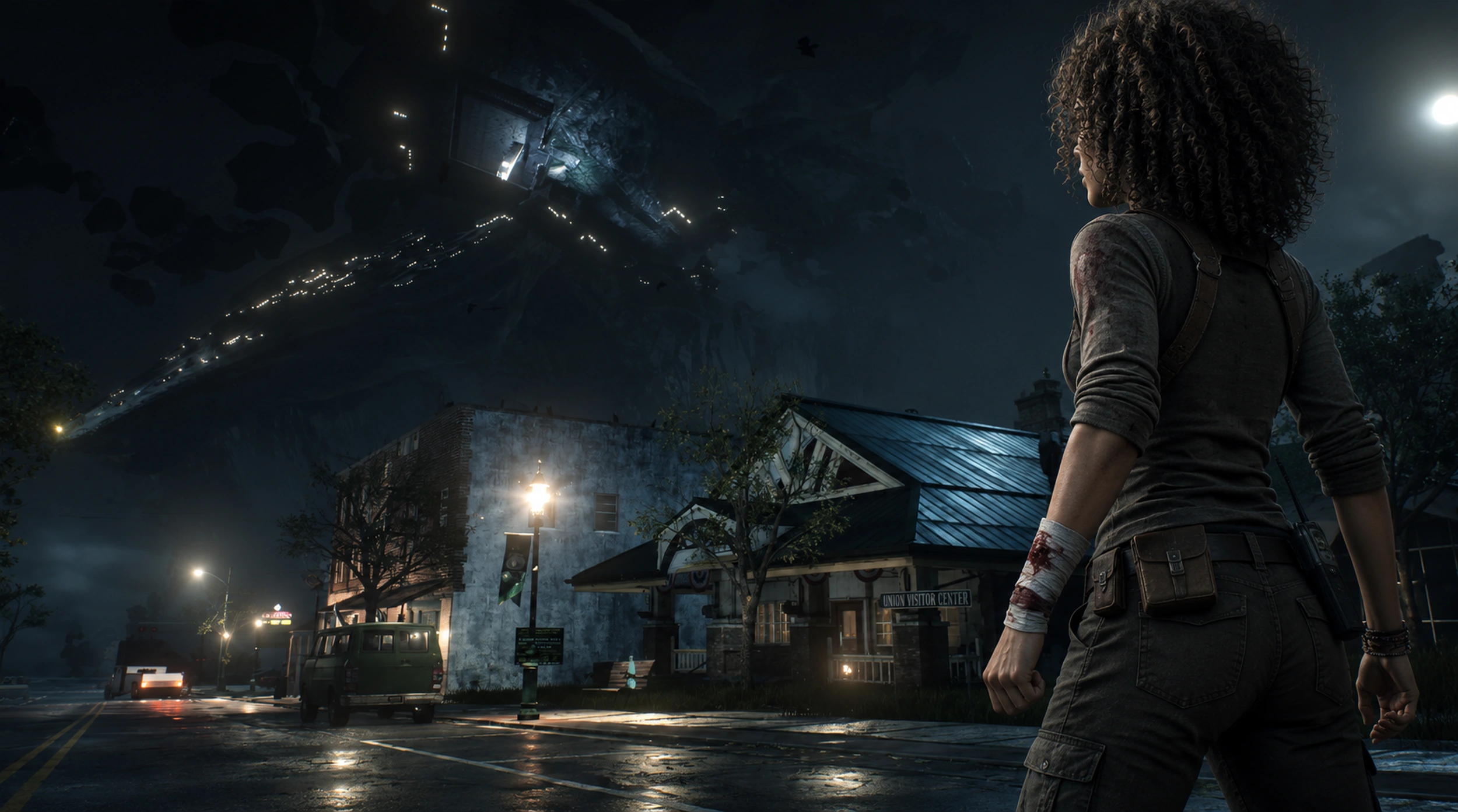
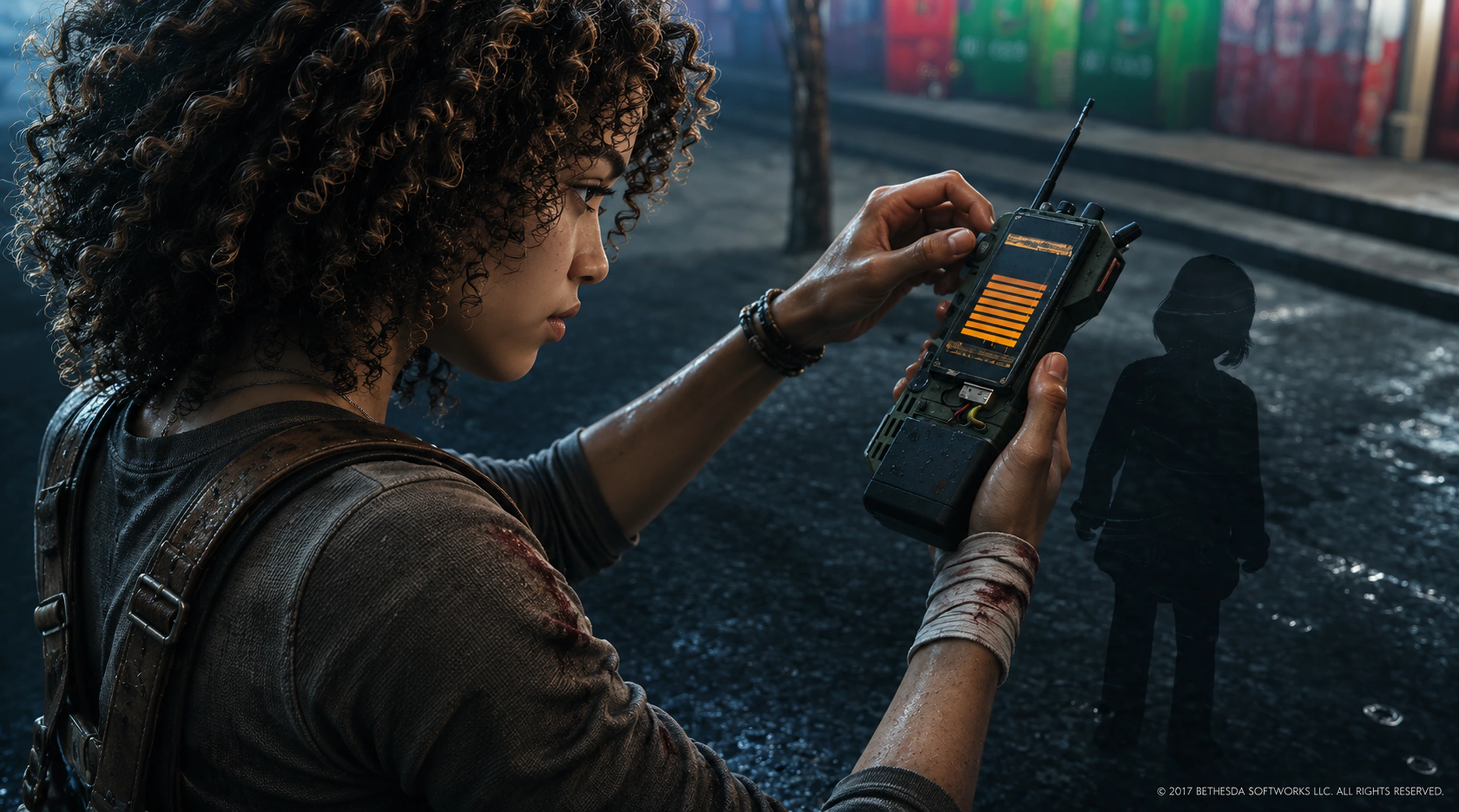
Joelle, meanwhile, finds herself standing in the remains of a street that no longer leads anywhere. Buildings drift above her, the pavement fractures beneath her boots and the sky looks as though somebody has dropped the entire universe onto a particularly unforgiving tiled floor. Her communicator crackles, and Sarah's voice finally breaks through the interference.
SARAH: “Joelle? Status?”
JOELLE: “Still alive. Slightly traumatised. Considering a career change. 😅”
SARAH: “Did you find the exit?”
Joelle looks up at the collapsing skyline, where the last recognisable pieces of Union are disappearing into darkness.
JOELLE: “Define exit. 😬”
SOME CITIES NEVER WAKE UP
Some cities never sleep, others never wake up, and some exist only because somebody couldn't bear to let go. When Sarah finally hears from Joelle again, Union has become little more than a fading nightmare, but the experience leaves behind something considerably more enduring than its monsters. The Evil Within 2 is an imaginative, beautifully disturbing survival-horror adventure that understands an essential truth about fear: it becomes unforgettable when there's something worth losing. Its atmospheric semi-open environments, rewarding exploration, flexible combat and extraordinary visual imagination make it one of the most distinctive horror experiences of its generation, while its emotional story gives the madness a purpose beyond simply frightening the player.
What begins as a journey into an artificial world ultimately becomes a story about the very real things that make us human: love, grief, regret and the extraordinary lengths we will go to protect the people who matter most. Sebastian Castellanos enters Union carrying the weight of a family he believes he has lost, and the game asks whether a man broken by tragedy can find the courage to become a father again. It's this emotional foundation that elevates the sequel beyond its collection of unforgettable horrors, proving that even the most nightmarish worlds can contain something worth fighting for.
Sarah's phone vibrates one final time. It's Joelle, whose enthusiasm for experimental urban planning has understandably reached an all-time low.
JOELLE: “I'm never visiting another small town again. 😵💫”
SARAH: “What about Silent Hill? 😏”
A long silence follows before the reply appears.
JOELLE: “I hate you. 😘”
Sarah smiles, slips the phone into her pocket and looks toward the empty road ahead. Somewhere, another town is waiting, another nightmare is preparing to unfold and another perfectly reasonable travel plan is about to go spectacularly wrong. But for tonight, Union can keep its secrets. Some cities never sleep, some never wake up, and some should never have existed in the first place.